One Facility, Fifty Rulebooks: How Industrial Operations Are Building Compliance Frameworks Across a Fragmented Regulatory Landscape
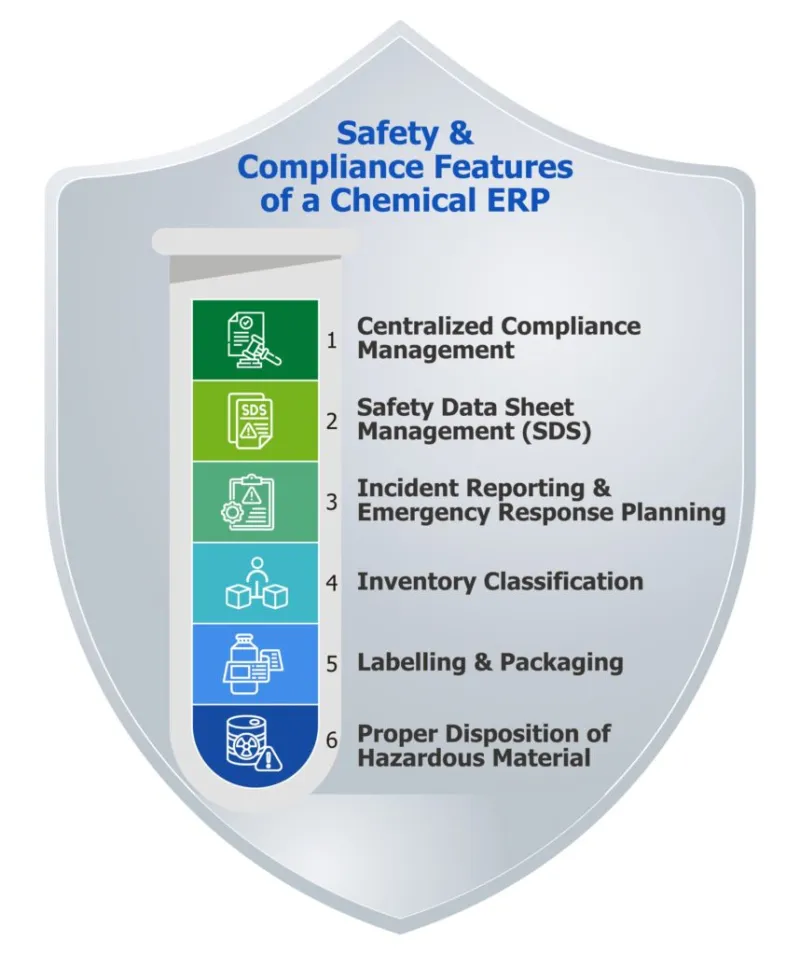
Photo: industrial facility compliance regulatory documentation chemical plant, via www.batchmaster.co.in
For a plant manager overseeing chemical operations in a state like Texas, California, or New Jersey, the phrase "we're in compliance" has never been more complicated to substantiate. Federal agencies — including the EPA, OSHA, and the Department of Transportation — establish baseline requirements for chemical handling, storage, reporting, and transport. But those baselines are precisely that: floors, not ceilings. State environmental agencies, fire marshals, and public health departments routinely impose requirements that exceed federal standards, and in some cases contradict the assumptions built into federal guidance. The result is a compliance environment that demands constant attention, careful documentation, and a working knowledge of regulatory geography that rivals legal expertise.
This is the daily reality for industrial chemical operations across the United States.
The Federal Foundation and Its Limits
Federal chemical regulation is itself multi-layered. The EPA administers the Clean Air Act, the Clean Water Act, RCRA (Resource Conservation and Recovery Act), and CERCLA, among others. OSHA governs worker exposure through its Hazard Communication Standard and Process Safety Management regulations. The DOT oversees hazardous materials transport. These frameworks were designed to establish uniform national standards, and in many respects they succeed — but they were not designed to be the final word.
Section 112 of the Clean Air Act, for instance, establishes National Emission Standards for Hazardous Air Pollutants, yet states with EPA-delegated authority can and do adopt more stringent emission thresholds. California's Air Resources Board operates with standards that routinely exceed federal limits, while states like Louisiana and Ohio have taken different enforcement postures that affect how facilities interpret the same underlying statute. A facility that achieves full federal compliance may still be operating outside state requirements — a distinction that carries significant financial and legal exposure.
The PSM standard under OSHA (29 CFR 1910.119) provides another instructive example. Several states operate their own OSHA-approved programs with expanded coverage lists, lower threshold quantities for regulated chemicals, or more prescriptive requirements for process hazard analyses. New Jersey's Toxic Catastrophe Prevention Act extends beyond federal PSM in scope and stringency. California's CalARP program similarly imposes requirements that go further than the federal rule. Facilities operating in these states cannot simply map federal PSM compliance onto their programs and call it sufficient.
Where Conflicts Emerge — and Why They're Costly
The most operationally disruptive compliance challenges arise not from clear conflicts between rules, but from ambiguity and gap-filling. When a federal standard is silent on a specific practice, state regulators frequently fill that silence with their own guidance — sometimes through formal rulemaking, sometimes through enforcement discretion. Facilities discover these gaps the hard way: during inspections, during permit renewals, or following an incident that draws scrutiny from multiple agencies simultaneously.
Consider the management of spent solvents at a manufacturing facility operating in multiple states. Federal RCRA provisions govern hazardous waste classification, but state-level interpretations of what constitutes a "legitimate recycling" exemption vary meaningfully. A practice that passes regulatory review in one state may generate enforcement action in another. For operations with facilities in multiple jurisdictions, maintaining consistency across sites while satisfying each state's distinct requirements is a genuine resource burden.
The cost of non-compliance is not limited to fines, though those can be substantial — EPA civil penalties under RCRA can reach $70,117 per day per violation under current adjusted figures. The more insidious costs include operational disruption during enforcement investigations, reputational exposure with customers and insurers, and the downstream legal costs of defending enforcement actions. For operations that supply regulated industries such as food processing, pharmaceutical manufacturing, or water treatment, a compliance gap can trigger contract reviews and procurement audits that far exceed the cost of the original violation.
Building a Framework That Flexes Without Breaking
The facilities that navigate multi-jurisdictional compliance most effectively share a common characteristic: they treat compliance as an operational system rather than a legal obligation to be satisfied after the fact. Several structural approaches have proven durable across different regulatory environments.
Regulatory mapping as a standing practice. Rather than conducting compliance reviews reactively — triggered by regulatory change notices or inspection scheduling — leading operations maintain living regulatory matrices that document applicable requirements by facility, by chemical, and by activity type. These matrices are updated on a defined cycle and assigned ownership within the organization. When a state agency proposes a new rule or a federal agency issues revised guidance, the facility's compliance posture against that specific change is immediately visible.
Designing to the most stringent applicable standard. Where multiple jurisdictions impose requirements on the same activity, some facilities elect to design operations around the most demanding standard in their footprint and apply that standard uniformly. This approach sacrifices some cost efficiency in lower-stringency jurisdictions but dramatically reduces the complexity of managing divergent compliance records and training requirements. It also provides a buffer against regulatory tightening — a facility already operating above current minimums is less exposed when those minimums rise.
Engaging state agencies proactively. Regulatory agencies at the state level frequently offer pre-compliance consultation programs, facility assistance visits, or informal guidance channels that federal enforcement structures do not replicate. Facilities that use these resources build working relationships with regulators, reduce interpretive uncertainty, and often receive advance notice of enforcement priorities that allow proactive adjustment. This is not regulatory capture — it is intelligent engagement with the institutions that hold permitting and enforcement authority over day-to-day operations.
Centralizing compliance documentation with local implementation. For multi-site operations, a centralized compliance function that maintains regulatory intelligence and documentation standards — while delegating day-to-day implementation to site-level personnel — balances consistency with practical accountability. The central function ensures that state-specific requirements are captured and reflected in site procedures; site personnel ensure that those procedures are actually followed under local operating conditions.
The Role of Chemical Suppliers in Compliance Architecture
Industrial chemical suppliers occupy a meaningful position in their customers' compliance frameworks. Accurate, current Safety Data Sheets that reflect the most stringent applicable classification standards reduce downstream liability for handling and storage decisions. Suppliers who provide technical support for regulatory questions — including assistance interpreting how product characteristics interact with state-specific thresholds — add value that extends well beyond the transaction itself.
For procurement teams evaluating chemical suppliers, the quality of compliance support has become a legitimate differentiating criterion. A supplier whose documentation is incomplete, whose SDS revision cycles are slow, or whose technical staff cannot address state-specific regulatory questions creates compliance risk that the purchasing facility ultimately absorbs.
Compliance as Competitive Infrastructure
The regulatory patchwork governing industrial chemical operations in the United States is not going to simplify. State-level regulatory activity has accelerated in recent years, particularly around PFAS, volatile organic compounds, and greenhouse gas reporting. Federal agencies have expanded enforcement capacity and penalty authority. The facilities that treat compliance as a fixed cost to be minimized will find themselves perpetually reactive — and periodically exposed.
The more durable posture is to treat compliance infrastructure as a form of operational capital: an investment that reduces uncertainty, protects production continuity, and preserves the facility's standing with the regulatory bodies, customers, and communities it depends on. In an environment where one compliance failure can cascade into operational, financial, and reputational consequences, the cost of building a robust framework is rarely the larger number.