Counting What You Cannot See: The True Financial Cost of Volatile Chemical Loss in US Industrial Operations
There is a particular frustration that accompanies losses you cannot directly observe. Equipment failures announce themselves. Spills demand immediate attention. But evaporation — the steady, imperceptible migration of volatile chemicals from storage vessels, process equipment, and transfer lines into the surrounding atmosphere — operates without any obvious signal. By the time the financial impact becomes visible on an inventory reconciliation report, weeks or months of loss have already accumulated.
Across US industrial facilities, this phenomenon is quietly draining operational budgets at a scale that few organizations have taken the time to accurately measure. Those that have are frequently surprised by what they find.
The Measurement Problem That Enables the Loss
The core challenge with evaporation loss is that it resists easy quantification. Unlike a pump failure or a ruptured fitting, vapor loss produces no discrete event to investigate. It manifests gradually, embedded in the gap between purchase volumes and production inputs — a discrepancy that finance teams often attribute to measurement error, rounding differences, or minor process variation rather than genuine material loss.
This accounting ambiguity is precisely what allows evaporation losses to persist. In facilities handling solvents, specialty acids, alcohol-based process chemicals, or aromatic compounds, that measurement gap can represent a surprisingly large portion of total chemical spend. Industry assessments across petrochemical, pharmaceutical, and specialty manufacturing sectors suggest that unmanaged vapor losses can range from two to eight percent of total volatile chemical inventory annually, depending on storage conditions, container design, and ambient temperature exposure.
For a mid-sized US manufacturer spending $2 million annually on volatile chemical inputs, even a conservative three percent evaporation loss translates to $60,000 in material that was purchased, received, and then simply disappeared before it ever contributed to production.
Where the Losses Are Concentrated
Not all chemicals evaporate at the same rate, and not all facility configurations create equal exposure. Understanding where losses concentrate is the first step toward managing them effectively.
Solvent-intensive operations carry the highest inherent risk. Facilities using acetone, methyl ethyl ketone, toluene, xylene, or isopropyl alcohol in open-process or semi-enclosed environments face continuous evaporative pressure. Even properly sealed storage systems experience vapor migration through seals and fittings during repeated thermal cycling — a particular concern in facilities located in climate zones with significant day-night temperature swings.
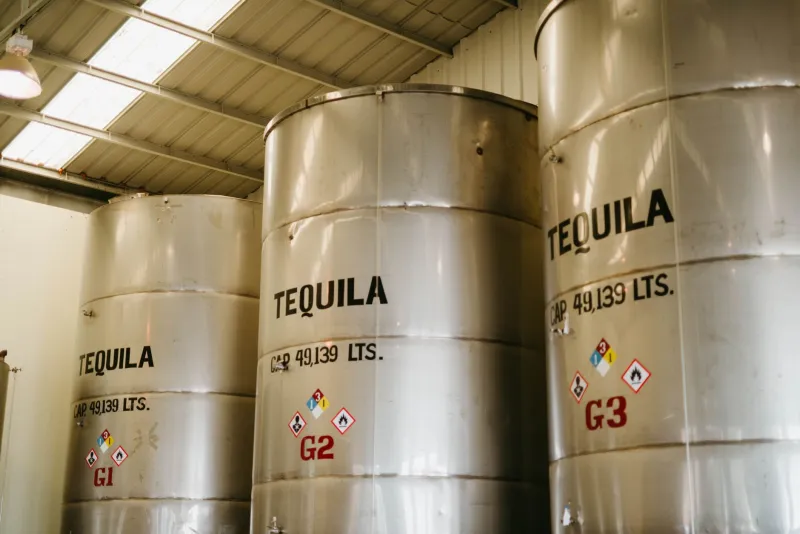
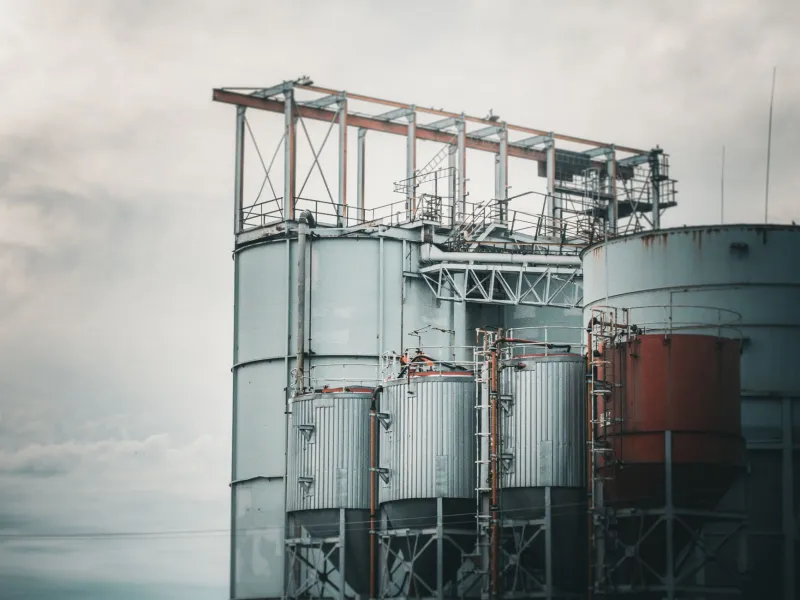
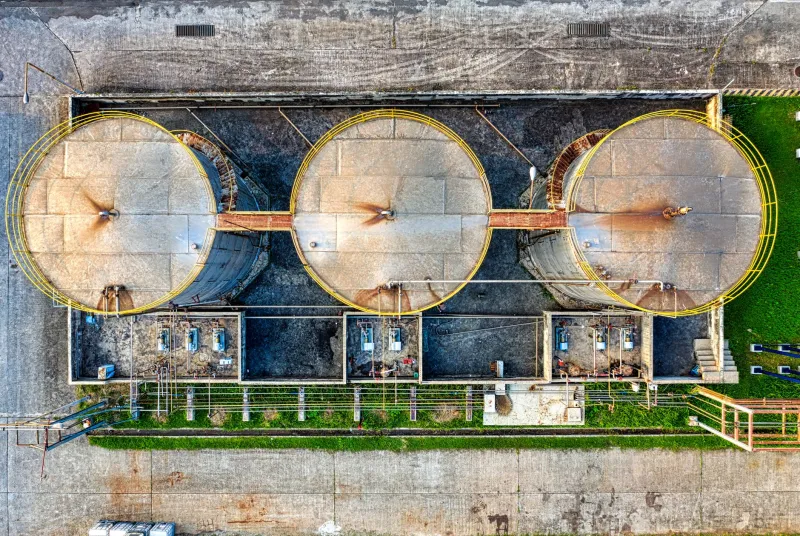
Bulk storage infrastructure presents a second high-loss category. Fixed-roof storage tanks without vapor recovery systems breathe with ambient temperature changes, expelling chemical-laden air during warming cycles and drawing fresh air back in as temperatures fall. Each breathing cycle carries measurable quantities of volatile material into the atmosphere. The cumulative loss across a large tank farm over a twelve-month period can be substantial enough to trigger EPA reporting thresholds under Toxic Release Inventory requirements — meaning the financial loss comes paired with a regulatory compliance dimension.
Transfer and dispensing operations represent a third concentration point. Every time a drum is opened, a bulk connection is made, or a process vessel is charged, vapor displacement occurs. In facilities without vapor recovery connections on filling equipment, that displaced vapor is simply lost to atmosphere. High-frequency dispensing operations compound these individual loss events into significant aggregate volumes.
Case Illustrations: What Discovery Looks Like in Practice
The pattern of discovery tends to follow a consistent arc. A facility implements a more rigorous chemical inventory tracking program — often motivated by regulatory compliance requirements rather than loss reduction goals — and the reconciliation data begins revealing persistent, unexplained shortfalls.
A specialty coatings manufacturer in the Midwest, upon implementing drum-level inventory tracking across its solvent storage area, identified a recurring monthly shortfall of approximately 4.2 percent across its ketone-based product inventory. Prior to the tracking program, this loss had been absorbed into standard process variance assumptions. Once isolated, the shortfall pointed directly to inadequate drum sealing practices and an open-top mixing station that had never been evaluated for vapor containment.
A contract chemical blender on the Gulf Coast discovered a similar pattern during an environmental compliance audit. The facility's bulk storage tanks, while structurally sound, lacked internal floating roofs or vapor recovery connections. Annual loss calculations, performed as part of the EPA compliance assessment, revealed that the facility was losing a volume equivalent to nearly five percent of its highest-turnover volatile product annually — material that had been consistently purchased but never appeared in finished product yield.
In both cases, the discovery process was the same: better measurement revealed losses that had always existed but had never been properly attributed.
Vapor Recovery and Loss Reduction: Strategies That Deliver Returns
The encouraging reality is that evaporation loss is a manageable problem. The engineering solutions are well-established, the payback periods are often favorable, and the secondary benefits — including regulatory compliance improvement and worker exposure reduction — add value beyond direct material savings.
Vapor recovery systems on bulk storage and filling equipment represent the highest-impact investment for facilities with significant volatile chemical volumes. By capturing displaced vapors during filling operations and returning them to the storage vessel or a dedicated recovery unit, these systems can reduce transfer-related losses by 90 percent or more. For facilities subject to air quality permitting requirements, vapor recovery also directly reduces reportable emissions, simplifying compliance management.
Floating roof tank retrofits address the breathing loss mechanism in bulk storage infrastructure. Internal floating roofs eliminate the vapor space above stored liquid, effectively eliminating the thermal breathing cycle that drives continuous loss. For tanks storing high-value or high-volatility products, the material savings from floating roof installation frequently justify the capital investment within two to four years.
Seal and fitting upgrade programs target the lower-level losses that accumulate across drum storage and distribution systems. High-integrity drum seals, vapor-tight fittings on dispensing connections, and closed-loop transfer systems collectively reduce the frequency and volume of incidental vapor releases during routine handling. These upgrades are typically lower in capital cost and can be implemented incrementally.
Inventory reconciliation discipline is not itself a loss-reduction tool, but it is an essential precondition for managing losses effectively. Facilities that cannot accurately measure evaporation loss cannot target interventions or verify improvement. Implementing chemical-specific tracking that accounts for all inbound volume, process consumption, and outbound transfers — with unexplained variance flagged for investigation rather than absorbed into rounding assumptions — creates the visibility necessary for systematic loss management.
The Regulatory Dimension That Sharpens the Business Case
Evaporation loss is not purely an internal financial matter. Under EPA regulations governing volatile organic compound emissions and hazardous air pollutants, facilities that exceed certain thresholds face permitting requirements, monitoring obligations, and potential enforcement exposure. The same material that is disappearing from inventory is, in many cases, appearing as a regulated emission.
This regulatory dimension meaningfully strengthens the business case for vapor management investment. Facilities that reduce evaporation losses through engineering controls are simultaneously reducing their emissions footprint, which can lower permit complexity, reduce monitoring burdens, and in some cases shift a facility from a major source classification to a minor source — a change that carries significant long-term compliance cost implications.
Treating Evaporation Loss as a Managed Variable
The facilities that manage volatile chemical loss most effectively share a common orientation: they treat evaporation as a controllable operational variable rather than an inevitable cost of doing business. They measure it, attribute it accurately, and invest in the engineering controls and operational disciplines that reduce it systematically.
For operations leaders and procurement professionals evaluating where to find sustainable cost reduction in chemical-intensive processes, vapor loss management deserves a prominent place in that conversation. The losses are real. The measurement tools exist. The interventions are proven. What has often been missing is the organizational decision to stop accepting invisible loss as invisible — and start treating it as the recoverable cost it genuinely is.